
Where should a porta potty go on a job site?
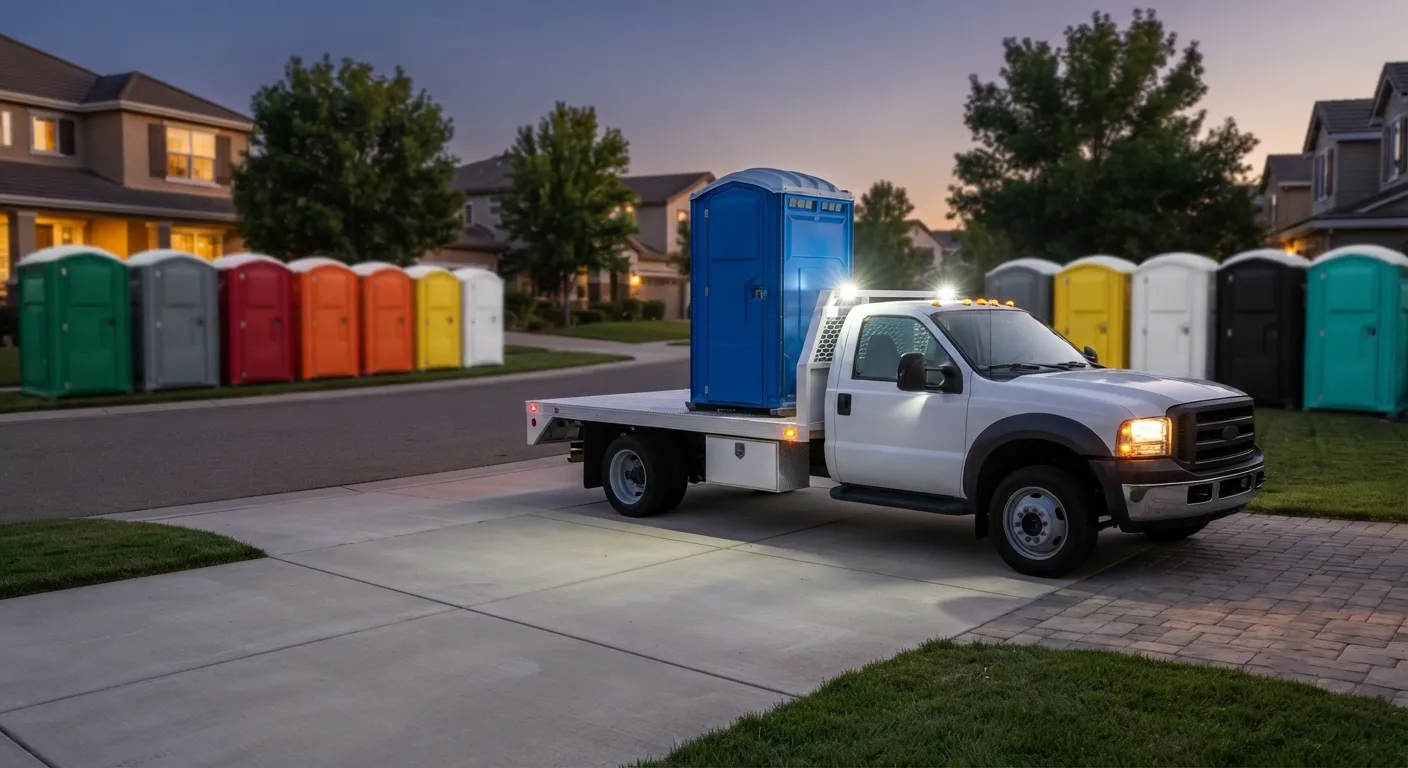
Pick flat ground first. A standard porta potty rental is about 44 by 48 inches at the base and stands roughly 92 inches tall, so a slope or soft dirt patch will tip it in wind or when a worker leans in. Set it on gravel, asphalt, or compacted soil, never on grass that turns to mud after rain. Leave swing room for the door and keep it out of the main foot path so nobody has to walk around it fifty times a day. For construction site services in Valdosta, we walk the site before delivery and mark the spot with the crew lead so there's no guessing on delivery day. If you're near Bemiss, about 8.0 miles northeast of Valdosta, or out toward Clyattville, 12.6 miles south, tell us the road surface leading in, because our truck needs solid footing too, same as the unit.
How much clearance does the service truck need?
Our pump truck needs a straight run to back in and hook up, and for anything sized like a roll-off dumpster rental we ask for about 60 feet of clear approach behind the drop point. Porta potties are smaller and more forgiving, but the truck still needs a path wide enough to angle in without clipping a fence line or parked equipment. If you're planning temporary fence rental around the same footprint, set the gate wide enough for the service vehicle, not just foot traffic. This matters more on sites near Moody AFB, 18.2 miles northeast, where security gates and gravel aprons can eat up your turning room fast. Ask about dumpster placement permit cost too if you're staging both a unit and a dumpster on the same lot, since the city may treat curb and right-of-way placement differently depending on the surface.
Do I need a permit to place a unit in the right of way?
Placement in the public right of way needs confirming with the City of Valdosta before delivery day. We have not verified a specific ordinance number for portable sanitation placement, so don't take anyone's word on a fee or a code section without calling the city yourself. The same caution applies to any dumpster placement permit question, since curb, sidewalk, and street placement rules vary by parcel and by what's already zoned for construction. If your event or job sits fully on private property, this usually isn't an issue, but a unit set on a public sidewalk or street shoulder is a different conversation. Check our porta potty permit requirements page for the general framework, then confirm locally before you commit to a spot.
How many units and where do they go relative to each other?
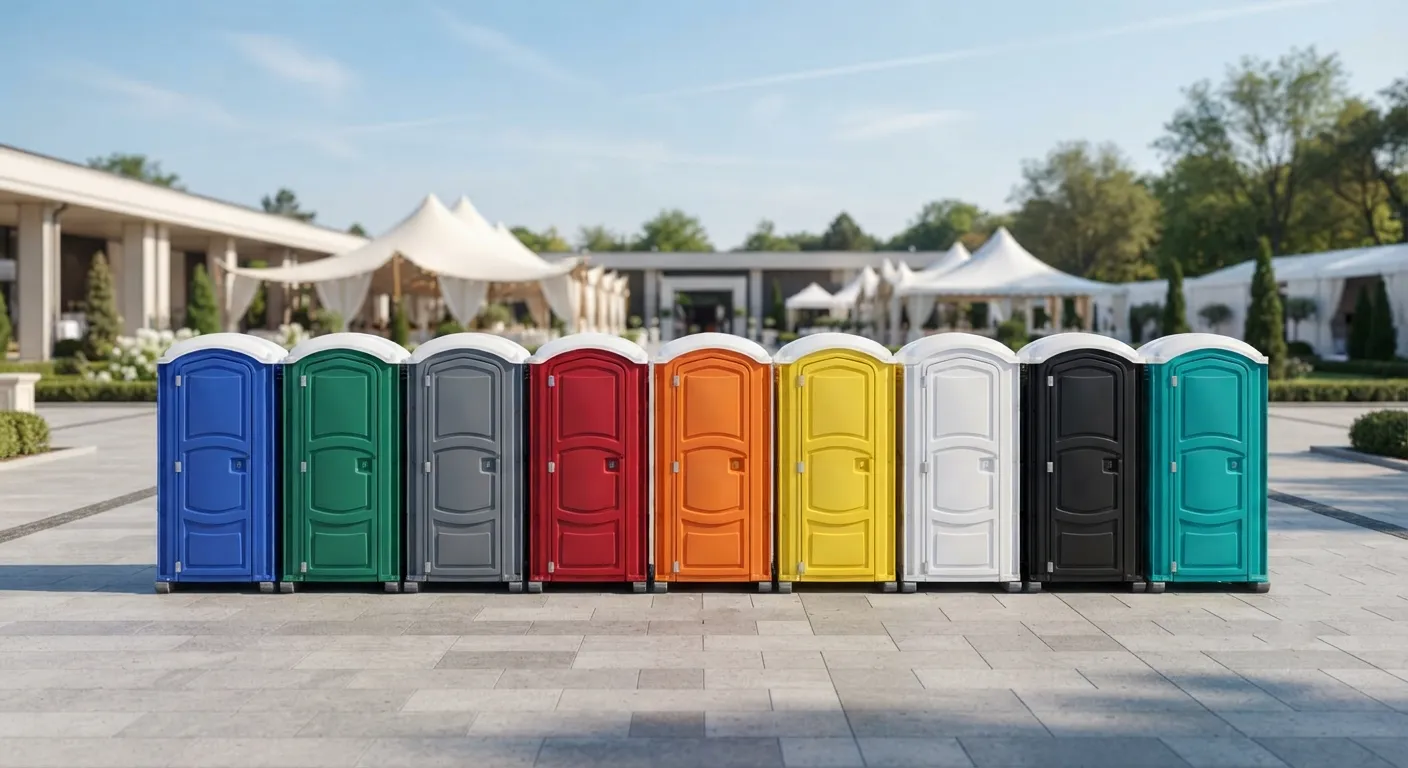
Spacing matters as much as placement. OSHA 1926.51(c) sets ratios for construction crews: one toilet for 20 workers or fewer, then one toilet and one urinal per 40 workers up to 200. Cluster units together near the break area, not scattered across the site, so servicing stays efficient and workers don't lose ten minutes walking. If you're clustering multiple single-user units, ADA Standards section 213.2 requires at least 5 percent of them to be accessible, with a minimum of one, so plan an ADA accessible porta potty into the layout from day one rather than adding it later. Our how many porta potties do I need guide walks through headcount math if you're still sizing the job. For events, keep restrooms visible from the main path but away from food service; see our event restroom rental and wedding restroom rental pages for layout examples specific to gatherings in Valdosta.
Placement quick reference
| Situation | What to check | Where to look |
|---|---|---|
| Sloped or soft ground | Level pad, gravel base | porta potty placement rules |
| Public sidewalk or curb | City confirmation needed | porta potty permit requirements |
| Multiple units on one lot | ADA cluster ratio, spacing | ADA restroom requirements |
| Truck access for service | 60 ft clear approach (dumpster-scale) | roll-off dumpster rental |
| Job site with 20+ workers | OSHA 1926.51(c) ratios | OSHA portable toilet requirements |
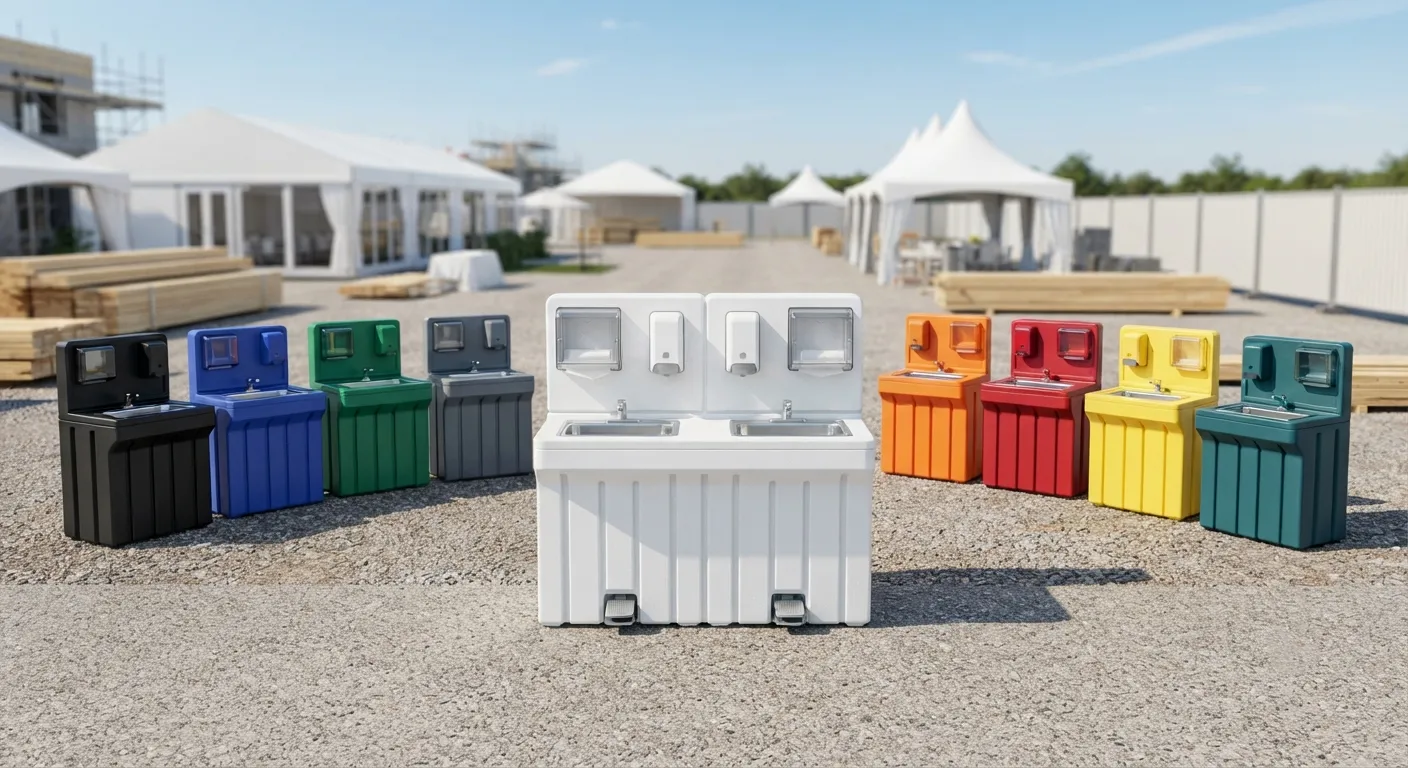
For sites that need washing stations alongside toilets, remember 29 CFR 1910.141(d)(2) requires soap and towels or a hand-drying device at wash stations, not just sanitizer, so plan a handwashing station rental with that in mind rather than swapping in a hand sanitizer station rental alone. If a crew is applying paints or coatings, OSHA 1926.51(f)(1) applies specifically to that work and calls for washing facilities near the task, worth flagging early if you're staging a mobile office trailer rental or storage container nearby with door clearance to match, since replacement doors on office trailers run wider than most crews expect.
Can I move a unit myself once it's placed?
Don't move a full unit yourself. A serviced tank holds 60 to 70 gallons and gets heavy fast, and shifting it off its pad risks a spill. Call us and we'll reposition it on the next service run, same trip, no separate charge conversation needed upfront.
What if my site has no flat ground at all?
We can usually find a compromise spot, gravel pad, compacted shoulder, or a leveled corner near the entrance. Walk the site with our driver before delivery. It saves a second trip and gets the unit stable on day one.
Does placement affect how often the unit gets serviced?
Yes, indirectly. ANSI/PSAI Z4.3 sets a baseline of one service visit per week for up to 10 users over 40 hours, but a hard-to-reach unit can slow that down. Keep the approach clear year-round.
Can I place a unit near a septic system I'm already pumping?
Keep separation between the two. Ask your septic contractor about tank access before you set a rental unit nearby; see septic pumping service for scheduling that runs alongside your rental period.
Where can I find placement help for a specific address?
Start with service areas to confirm we cover your location, then request a site walk through request a quote. We'll flag clearance issues before delivery day, not after.
Next step
Get a delivery date
Tell us the address, the dates and the headcount. We size the order and confirm the route.