
How Many Units Does a Farm Crew Need?
Start with headcount, not acreage. OSHA 1928.110 sets the baseline for field sanitation: one toilet facility per 20 hand-labor employees, and it has to sit within a quarter mile of where people are working, not back at the barn. That rule alone decides placement more than anything else. A 15-person tobacco or produce crew usually runs fine on one standard porta potty rental; a 40-person harvest crew needs two units minimum, split across the field so nobody's walking a half mile on a break. Our how many porta potties do I need guide walks through the math if your crew size shifts by season.
Construction-style ratios under OSHA 1926.51(c) don't apply to farm labor the same way, but if you're running a mixed crew, building a barn and harvesting at once, it's worth checking both standards. We quote by crew size and walk distance, not by acreage, because that's what actually drives compliance. Pricing for a single unit sits around $150 to $200 a month on our monthly porta potty rental page, and daily-use farms mid-season often step up to weekly service instead. Check our porta potty rental cost page for the full breakdown by term.
Where Should Units Go on a Working Farm?
Units belong wherever the crew actually is, moved as the work moves. A rice paddy crew in June and a packing shed crew in October aren't standing in the same spot, so we treat farm placement as a seasonal question, not a one-time drop. Ground has to be level and firm enough that the unit doesn't lean or sink after rain, similar to the stability call we make on any porta potty placement guide job. If the farm sits near a public road, we also flag it against our porta potty permit requirements notes, since placement in a right-of-way needs confirming with the City of Valdosta before drop-off, not assumed.
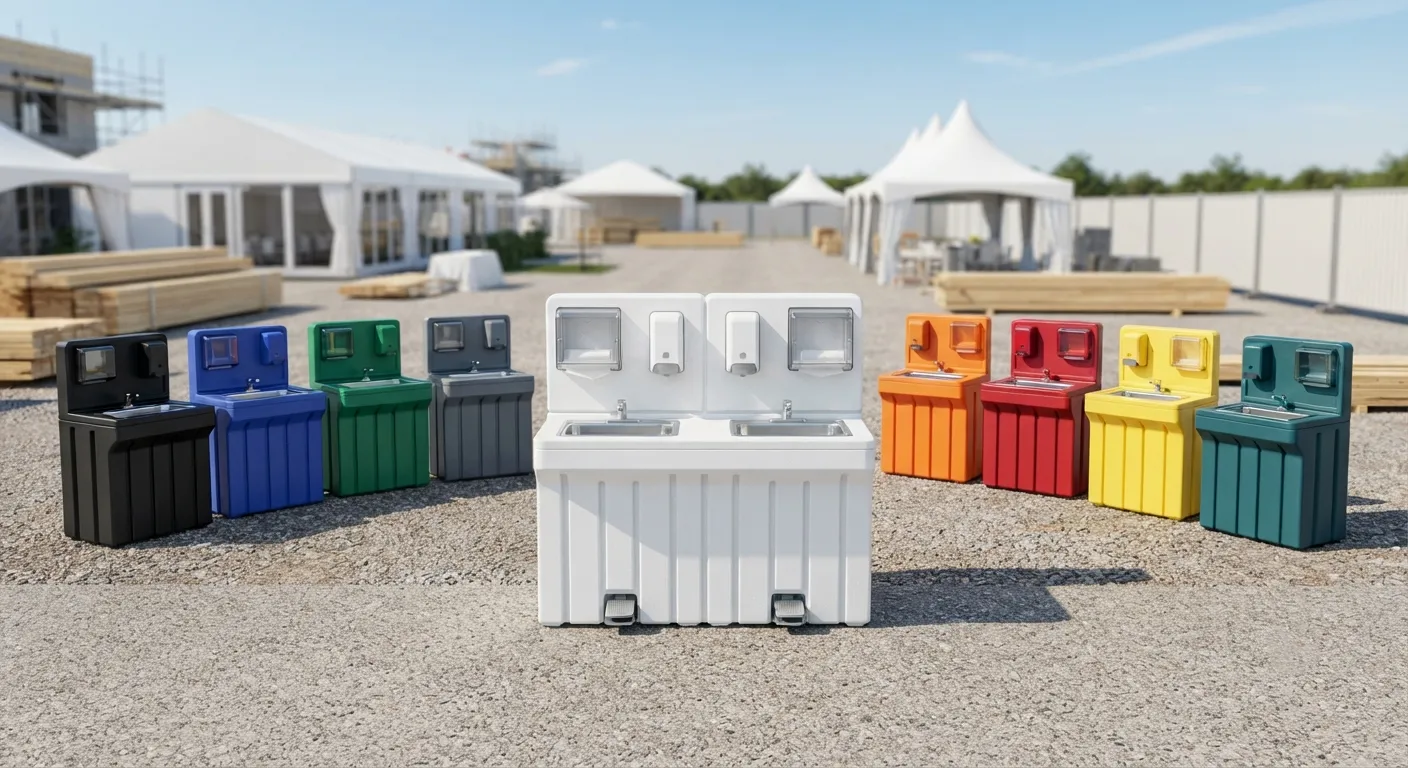
Water matters as much as the toilet. OSHA 1926.51(a)(1) calls for an adequate supply of potable water at any place of employment, and 1928.110 repeats that for field labor specifically. We usually pair a toilet with a handwashing station rental or a portable sink rental at the same stop, since a bare toilet without water doesn't satisfy either standard. If your crew handles pesticides or herbicides, OSHA 1926.51(f)(1) requires washing facilities for that contact specifically, separate from the general field sanitation rule, and we'll route a sink to that spot even if it's not where the toilet sits.
Do Farm Restrooms Need to Be ADA Accessible?
Usually not for field labor itself, but it depends on who's on site. If the farm hosts a public event, a corn maze, a pick-your-own weekend, a wedding in the barn, accessible units come into play under ADA rules even though the daily crew doesn't need them. ADA Standards 213.2 requires that where portable units are clustered, at least 5 percent, and never fewer than one, be accessible. Our ADA accessible porta potty units meet the 60 inch turning circle called out in ADA 304.3.1 and the 32 inch clear door width in ADA 404.2.3, priced from around $120 to $240 depending on day or week rental.
Farms running a public-facing event alongside working acreage often mix unit types: standard units for the crew, one accessible unit and maybe a deluxe flushable porta potty for guests. We've set that combination up for farms within about 8 miles of Bemiss and as far out as Clyattville, 12.6 miles south of Valdosta, where field access roads are tighter and delivery trucks need the full 60 feet of straight clearance we ask for on any roll-off or trailer drop. If your event runs bigger, look at our festival restroom rental or county fair restrooms pages for volume pricing.
| unit | duration | typical price |
|---|---|---|
| standard | day | $150 |
| standard | week | $200 |
| standard | month | $200 |
| ada | week | $185 |
Livestock operations and dairies sometimes need more than a toilet. If manure handling or wash-down water is part of the operation, ask about a holding tank rental or septic pumping service alongside the restroom order, since a farm septic system runs on its own pumping schedule separate from field sanitation. Farms out toward Naylor, 15.4 miles east, and Moody AFB, 18.2 miles northeast, are within our regular delivery loop, so seasonal swings in crew size don't mean a scheduling headache.
How often do porta potties get serviced on a farm?
Weekly is the baseline for up to 10 users over a standard 40 hour week, per ANSI/PSAI Z4.3. Harvest crews running longer days or bigger headcounts often need twice-weekly service. We adjust the schedule as crew size changes through the season, not on a fixed contract.
Can I move units between fields during harvest?
Yes, and most farms do. We schedule relocation ahead of the move so a unit is waiting at the new field edge, not sitting empty where the crew already left. Call ahead by a day or two during peak season.
Do I need water and a toilet, or just a toilet?
Both. OSHA 1928.110 requires potable water and handwashing alongside the toilet for hand-labor crews, not one or the other. A bare toilet with no water source doesn't meet the standard, so we pair one with a sink on every field order.
What if my crew works pesticides or herbicides?
That triggers OSHA 1926.51(f)(1) specifically, separate from general field sanitation. Washing facilities need to be available wherever contact with those chemicals happens, so we'll place a sink or hand sanitizer station rental at that exact work point, not just back at the main restroom.
Is a permit needed to place a unit on farmland?
Usually not on private acreage, but placement near a public road in Valdosta needs confirming with the city before drop-off. See our porta potty permit requirements page, and ask us to check before delivery day if you're unsure.
Next step
Get a delivery date
Tell us the address, the dates and the headcount. We size the order and confirm the route.