
How Do Porta Potties Work?
There's no mystery to it. Waste drops into the holding tank below the seat, and a blue chemical deodorizer breaks down solids and keeps odor down between service visits. A vent pipe runs from the tank to the roof, so air moves up and out instead of sitting inside the unit. The tank on a standard porta potty rental holds 60 to 70 gallons, and the unit itself is about 44 by 48 inches on the ground and stands roughly 92 inches tall. No plumbing, no electricity. That's why you see them dropped at a Valdosta construction site on a Monday and picked up weeks later with nothing but a delivery pad underneath. ANSI/PSAI Z4.3, the industry standard for portable sanitation, sets a baseline of one service visit per week for up to 10 users across a 40 hour week, though busier sites need more frequent stops. If you're trying to figure out how many units a crew actually needs, the how many porta potties do I need guide walks through the math, and OSHA 1926.51(c) sets the ratio at one toilet per 20 workers on a construction site.
How Do Flushable Porta Potties Work?
A deluxe flushable unit uses a small freshwater tank and a foot pump or pressurized flush to rinse the bowl into a separate holding tank, which is what gives it that lower-odor, closer-to-home feel. Unlike the standard chemical toilet, the fresh and waste sides stay separate, so the flush doesn't just push waste back at you. Deluxe flushable porta potty rentals run higher than a standard unit because of the added plumbing and the water reservoir that needs refilling on service day. These get requested a lot for weddings and backyard events around Valdosta where guests expect something closer to a real bathroom. For anything with a sink, a step up, or a full stall setup, a restroom trailer rental covers weddings, corporate events, and film shoots that need more than a single flushable unit.
How Does a Portable Sink Work?
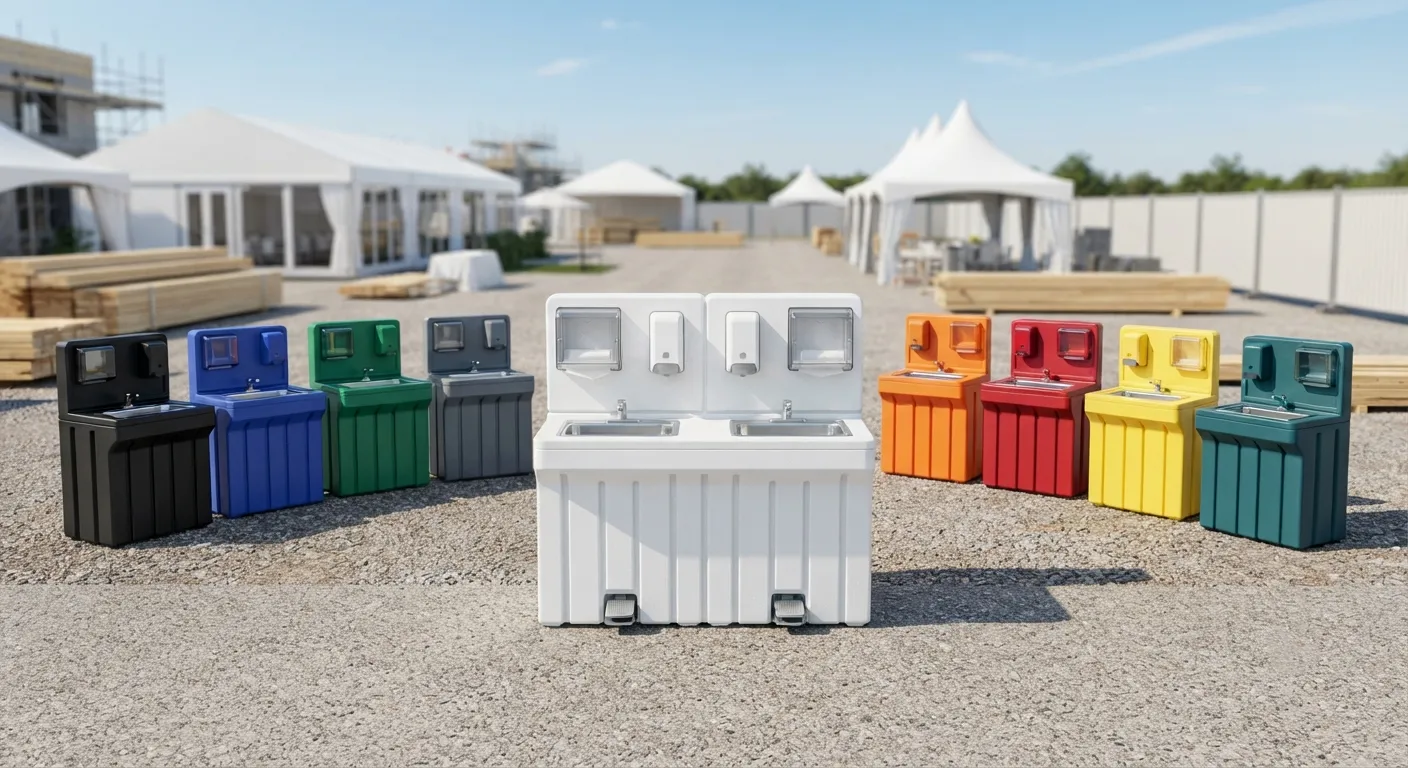
A portable sink runs on the same no-hookup logic as a porta potty: a fresh water tank feeds the faucet, either by foot pump or a small onboard pump, and gray water drains into a separate holding tank underneath. Soap dispenses from a built-in reservoir, and most units carry paper towels or an air dryer mounted to the side. This matters because 29 CFR 1910.141(d)(2) requires soap and towels or a hand-drying device at washing facilities, and hand sanitizer alone doesn't satisfy that. A portable sink rental makes sense on food-service sites and farm labor crews, and it pairs naturally with a handwashing station rental when a job needs several wash points spread across a site. Farm operations hiring hand-labor crews should also know OSHA 1928.110 requires field sanitation, potable water, and handwashing within a quarter mile walk of the work area, which is why farm and agricultural restrooms placement gets planned around that walking distance, not just around the field edge.
Do Porta Potties Smell, and What Keeps Them Clean?
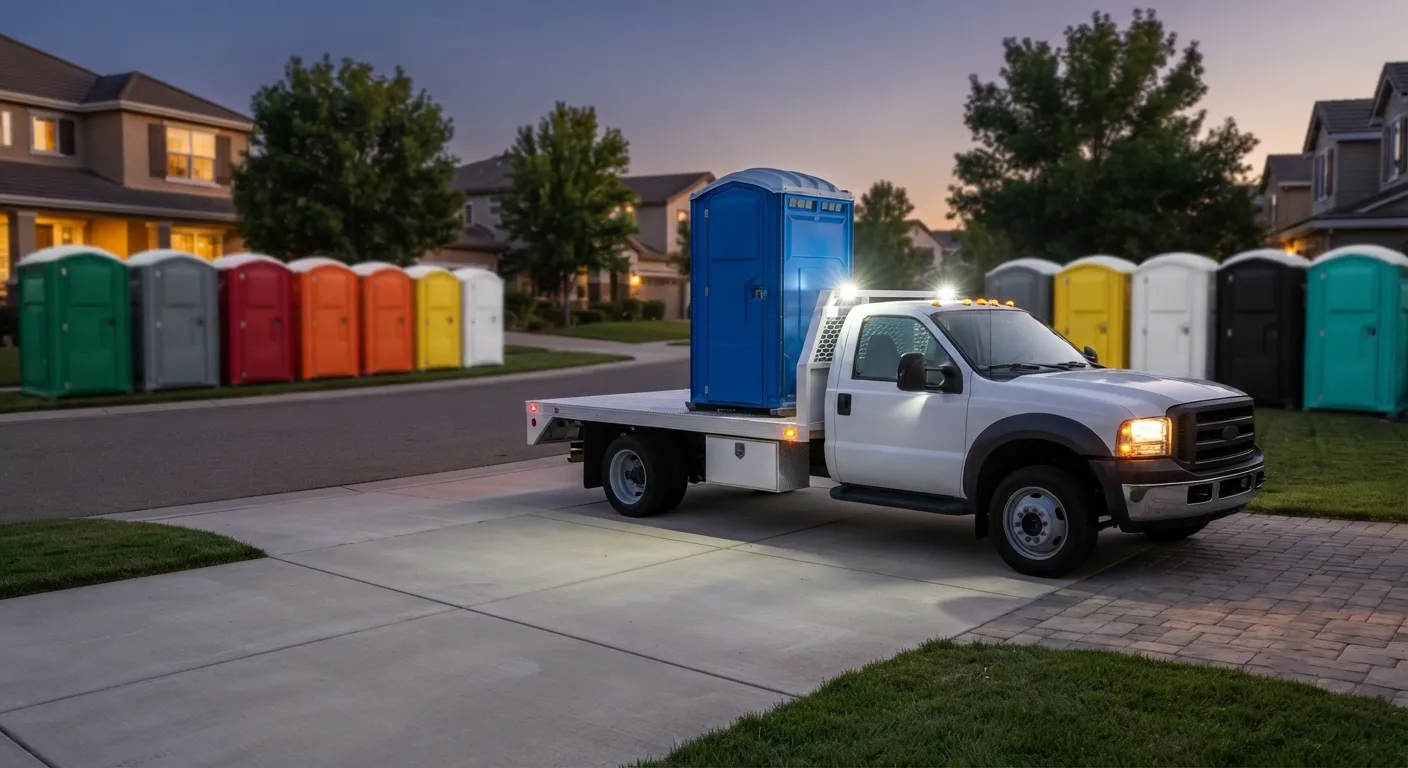
They shouldn't, if they're serviced on schedule. The blue liquid you see in a fresh unit is a deodorizing chemical package that breaks down waste and masks odor between pump-outs, and it's part of why a fresh unit smells like almost nothing. Once that chemical balance gets overwhelmed, either from heavy use or a missed service, odor creeps in fast. Portable toilet chemicals near me searches usually come from people trying to buy chemical packets retail, but Valdosta Porta Pros handles that dosing as part of every scheduled visit, so there's nothing extra to buy or measure. The how often are porta potties cleaned guide breaks down service frequency by event size and job duration. Curious what all this costs before you commit? The porta potty rental cost and porta potty rental per day pages lay out real pricing, and a monthly porta potty rental makes more sense than a string of short rentals for a long job.
| unit | day | week | month |
|---|---|---|---|
| standard | $100-$350 | $130-$500 | $125-$325 |
| deluxe | $85-$1200 | $150-$290 | - |
| ada | $200-$400 | $240-$500 | - |
A weekend rental for a standard unit runs $125 to $400, which covers most backyard parties and small weekend builds. For camping trips, a camping porta potty works the same way as a job site unit, just scaled down for a shorter stay off Clyattville, about 12.6 miles south of Valdosta, or out toward Bemiss, 8.0 miles northeast. And for crews on a tight footprint, an ADA accessible porta potty needs a 60 inch turning circle inside the unit under ADA Standards 304.3.1, plus a 32 inch minimum door opening under ADA Standards 404.2.3.
Why does a construction worker have to walk so far to a porta potty?
Placement rules require accessible routes, not just proximity. OSHA 1926.51(c) sets toilet ratios by crew size, but distance depends on site layout. The porta potty placement guide covers spacing, and construction site services pages cover full-site planning for larger Valdosta builds.
Do camping porta potties work differently than job site units?
Not mechanically. Same holding tank, same chemical deodorizer, same vent stack. The difference is usually size and service frequency, since camping units see lighter, shorter-term use. Check camping porta potty for rental specifics before a weekend trip.
Can a porta potty freeze in winter?
Yes, the chemical mix and tank contents can freeze in hard cold, which slows the breakdown process and can crack internal parts. The porta potty in winter guide covers antifreeze-rated chemical packages Valdosta Porta Pros uses seasonally.
Is a permit needed to place a unit on a Valdosta street or sidewalk?
Placement in the public right of way needs confirming with the city before delivery. See porta potty permit requirements for what to check, and dumpster permit requirements if you're renting a roll-off alongside it.
How is a septic tank cleaning chemical different from what's in a porta potty?
Septic tank cleaning chemicals target bacteria balance inside a fixed tank, while porta potty chemicals deodorize and break down waste in a portable holding tank. A residential septic tank typically needs pumping every 3 to 5 years; see septic pumping service for scheduling.
Next step
Get a delivery date
Tell us the address, the dates and the headcount. We size the order and confirm the route.