
How Many Units Does a Race Need?
It depends on runner count, course length and how many aid stations you're running. A start line with 300 runners needs more than a finish line with the same 300, because everyone hits the start at once and trickles through the finish over an hour or two. Standard porta potty rental units work fine for most aid stations. Start and finish areas usually want a heavier concentration, and any race expecting spectators should add units near viewing areas too. ADA Standards section 213.2 requires that where portable units are clustered, at least 5 percent must be accessible, with a minimum of one unit, so a bank of ten units at your start line needs at least one ADA accessible porta potty in the mix. If your race draws a crowd that wants something nicer than a standard unit, a deluxe flushable porta potty at the finish line festival area is worth the upgrade. Races with VIP tents or sponsor hospitality sometimes bring in a restroom trailer rental instead, and a 2 stall restroom trailer handles a modest crowd without the wait. Use our how many porta potties do I need guide to run the numbers for your specific course, and check OSHA portable toilet requirements if any race staff count as employees under a general industry or construction classification, since OSHA 1926.51(c)(1) sets ratios for construction crews and 1910.141(c)(1)(i) covers general industry sites like a race operations tent.
Where Do Units Go Along the Course?
Units belong wherever runners cluster and vehicles can still reach them. Aid stations at mile 3, 6 and 9 of a half marathon each need their own restroom coverage, and course marshals need water access too, which ties into OSHA 1926.51(a)(1)'s requirement for an adequate supply of potable water at any worksite, including race operations. Placement in the public right of way needs confirming with the City of Valdosta before race day, since this varies by street and event permit. A standard unit sits about 44 by 48 inches on the ground and stands about 92 inches tall, small enough to tuck beside a water table without blocking the course. Our porta potty placement guide covers ground clearance and access routes in more detail. If your race uses a light tower or generator at a nightime start, ask about temporary power pole setup too. Knowing how to brace a temporary power pole matters here: it needs guy wires or a stabilized base plate rated for the pole's height, staked well clear of the runner corridor, because a pole that shifts in soft ground during a pre-dawn start is a hazard nobody wants at mile zero. For courses running through Bemiss, about 8.0 miles northeast of Valdosta, or out toward Clyattville, 12.6 miles south, factor in extra drive time for our trucks when you set delivery windows. Fencing along a finish chute also helps keep crowds off the timing mats. See temporary fence rental or crowd control barrier rental for options.
What Does Race Restroom Rental Cost?
Pricing depends on unit type, how many days you need them on site, and delivery distance. Most race organizers rent for a single event day but need units delivered the day before for setup and picked up the morning after.
| unit | day rate | typical event rate |
|---|---|---|
| standard | $100 to $350 | $200 to $800 |
| ada | $200 to $400 | included in cluster count |
| deluxe | $85 to $1200 | quote per unit |
| trailer | $175 to $2500 | $2499 to $3899 |
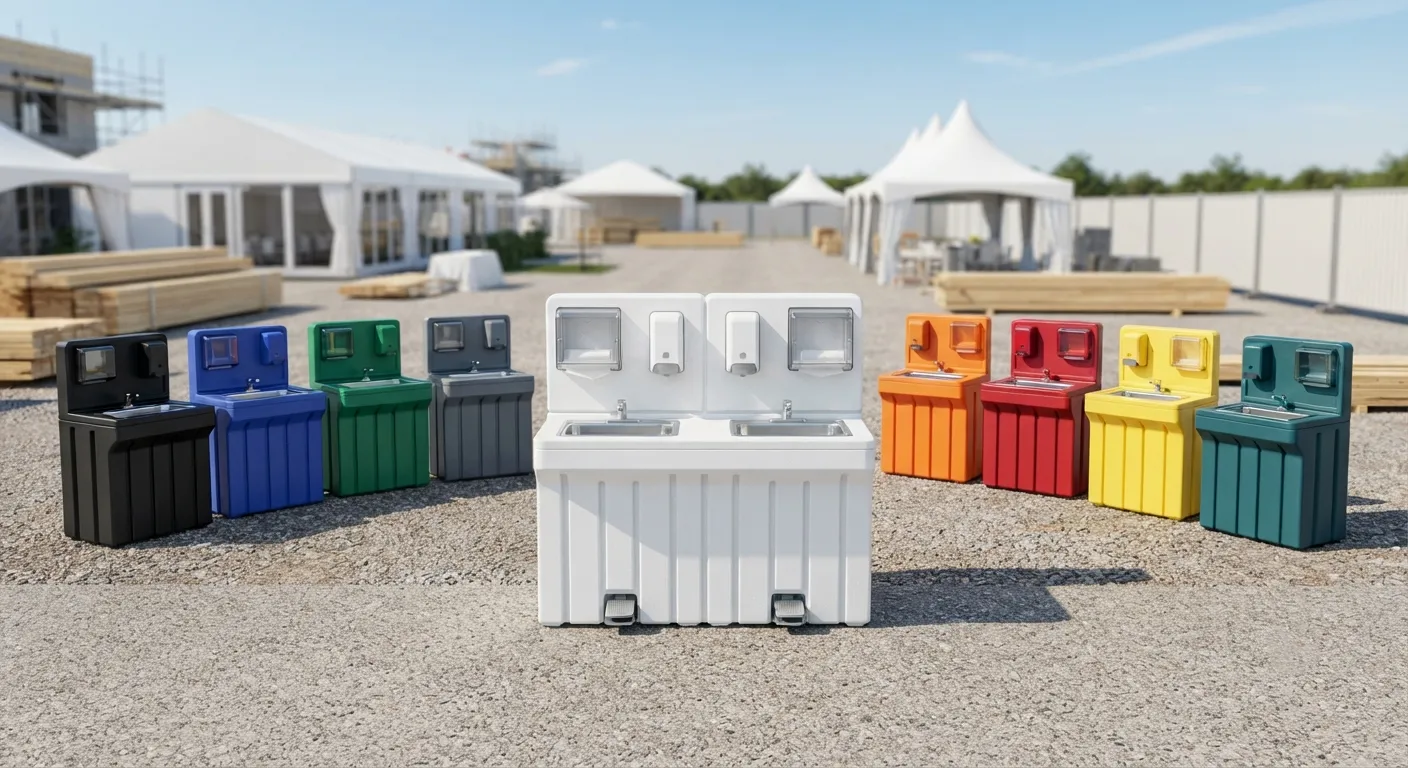
Delivery fees run $100 to $500 for a single day, depending on distance and how many units you're moving. Races out near Naylor, 15.4 miles east, or Moody AFB, 18.2 miles northeast, will sit toward the higher end of that delivery range. Check our porta potty rental cost and porta potty rental per day pages for a fuller breakdown, and our event restroom rental page if your race includes a post-race festival that needs restrooms running longer than the race itself. For handwashing at aid stations, a handwashing station rental or portable sink rental satisfies 29 CFR 1910.141(d)(2), which requires soap and towels or a hand drying device, not hand sanitizer alone, if you've got paid staff or volunteers working the tables.
How far in advance should I book race restrooms?
Book as soon as your permit is approved, ideally 4 to 6 weeks out. Popular race weekends in Valdosta fill delivery slots fast, and unit availability tightens closer to race day. Early booking also gives us time to plan routes to aid stations spread across the course.
Do I need an ADA unit at every aid station?
Not necessarily every station, but any cluster of units needs at least one accessible unit per ADA Standards section 213.2. Most races put their required accessible units at the start, finish and one or two major aid stations rather than every single stop.
Can units be moved mid-race for a rolling course?
Some races reposition a few units between waves, but most aid station units stay fixed once placed. Moving units mid-event risks blocking the course or missing a runner wave entirely, so we recommend fixed placement with enough units to start.
What happens if my race runs through multiple jurisdictions?
Course permits and right-of-way rules can differ block by block. Confirm placement rules with each relevant authority before finalizing your restroom map, since a unit legal on one street may need relocation on another.
Do you service units during a multi-day race weekend?
Yes, service visits get scheduled around your event timeline. A single race day rarely needs a mid-day service call, but weekend-long events with expo tents often do, especially for handwashing stations near food vendors.
Next step
Get a delivery date
Tell us the address, the dates and the headcount. We size the order and confirm the route.